
Trying to Conceive? Here’s When to Stop Waiting and Get Checked

“Should we just keep trying a little longer?” If you’ve asked yourself that question more than once, you’re not alone. Trying to conceive can turn every month into a cycle of hope and waiting, and it’s hard to know when waiting stops being the right plan. Here’s the short answer, and what happens if you decide it’s time. When to get checked Fertility specialists generally recommend an evaluation if: [1][2] You’re under 35 and haven’t gotten pregnant after 12 months of regular, unprotected sex. You’re 35 or older and haven’t gotten pregnant after six months of trying. You have a known risk factor, such as irregular or absent periods, PCOS, endometriosis, a history of pelvic infection or sexually transmitted infections, or past fertility problems. If any of those risk factors apply, you don’t need to wait the full six or twelve months. Coming in sooner simply means you’ll get answers sooner. If irregular periods are part of your story, our post on PCOS, insulin resistance, and your cycle is a good place to start. What a fertility evaluation actually involves A first evaluation is mostly conversation and simple testing, and much less intimidating than most people expect. Your history. We’ll talk about your cycles, any past pregnancies, your health conditions and medications, and how long you’ve been trying. Lab work. Basic blood tests and a urinalysis, often including hormone levels that show whether you’re ovulating. Ovarian reserve testing. This estimates how many eggs you have remaining, which helps guide timing and next steps. Imaging, if needed. An ultrasound, a sonohysterogram, a hysteroscopy, or a hysterosalpingogram (HSG) can check your uterus and whether your fallopian tubes are open. Your partner, too. Fertility challenges can come from either partner, so an evaluation often includes testing for a male partner as well. [1] What happens after Sometimes the answer points to something simple, like timing intercourse around ovulation, adjusting a medication, or addressing a health condition that’s affecting your cycle. Sometimes it points toward fertility treatment. Either way, you’ll have information instead of guesswork, and a plan built around your goals. If you’re not trying yet but planning to, a preconception visit can help you prepare your body before you start. You don’t have to keep guessing Waiting month after month without answers is exhausting. A conversation with your OB/GYN can be the first step toward clarity. Learn more about fertility evaluation at Women’s Integrated Healthcare, or schedule an appointment in Southlake or Fort Worth. Clinical references [1] ACOG, “Evaluating Infertility” (patient FAQ) [2] American Society for Reproductive Medicine (ASRM), “Definitions of infertility and recurrent pregnancy loss”
Choosing Birth Control That Fits Your Life, Not Just Your Cycle
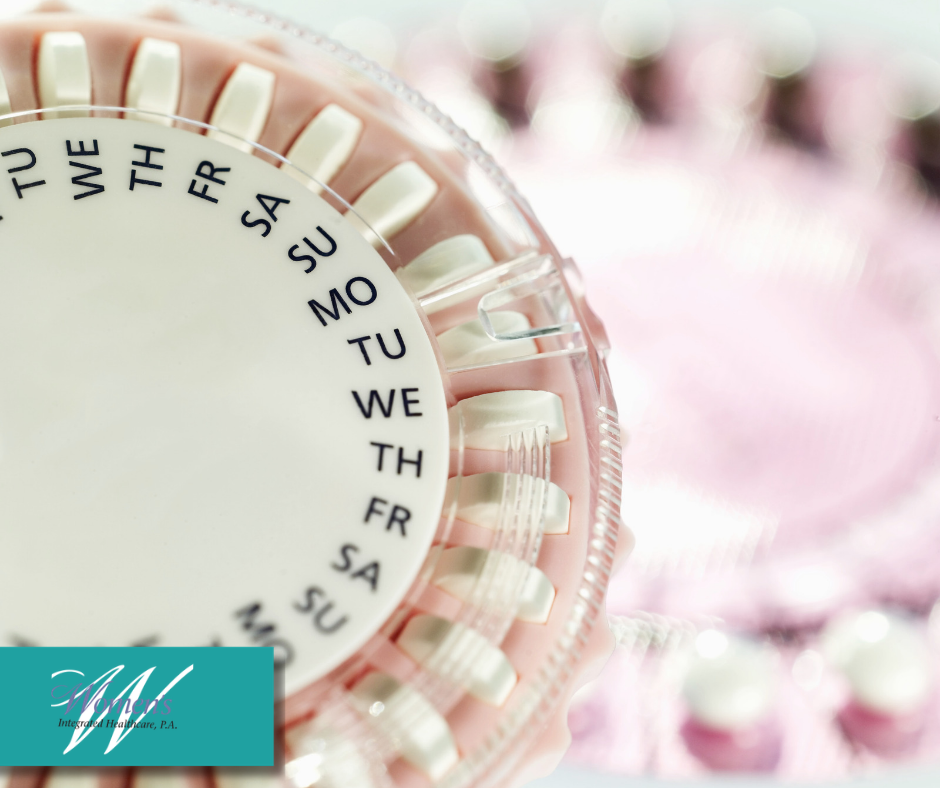
Most birth control conversations start and end with one question: does it prevent pregnancy effectively? That’s an important question. It’s also not the only one that matters. What actually goes into the right choice The most effective method on paper isn’t automatically the right method for you. A good birth control conversation accounts for your health history, your cycle symptoms, your daily routine, whether you tolerate hormones well, and what you’re hoping to manage beyond pregnancy prevention, whether that’s heavy periods, acne, or PCOS-related symptoms. [1] Some methods require a daily routine. Others are set-and-forget for years at a time. Some patients want a method they control entirely on their own schedule. Others prefer something that removes the daily decision altogether. None of these preferences are wrong, and a good consultation treats them as relevant information, not obstacles to a “correct” answer. Hormonal isn’t the only category Birth control conversations sometimes default to hormonal options without acknowledging non-hormonal choices, including copper IUDs and barrier methods. If you’ve had a difficult experience with hormonal birth control in the past, or simply prefer to avoid it, that’s a legitimate starting point for the conversation, not something to work around quietly. Your other health goals belong in this conversation too If you’re also managing heavy periods, painful cycles, or PCOS symptoms, some birth control methods can help with those issues directly while also preventing pregnancy. That’s worth discussing explicitly rather than treating contraception and symptom management as two separate conversations that happen to overlap. If heavy bleeding and clots or PCOS-related cycle changes are part of what you’re managing, mention that up front so we can look at both at once. Changing your mind is allowed A method that made sense five years ago might not fit your life now. Side effects that felt manageable in your twenties might not feel worth it anymore. If your current method isn’t working for you, whether physically or logistically, that’s a normal reason to revisit the conversation, not a sign you chose wrong the first time. A conversation, not a prescription We don’t hand out a birth control method based on a five-minute exchange. We want to understand what matters to you, what you’ve tried before, and what you’re hoping this choice will actually do for your life, not just your cycle. Ready to find a method that actually fits? Schedule a consultation with Women’s Integrated Healthcare in Southlake or Fort Worth. Clinical reference [1] American College of Obstetricians and Gynecologists, “Choosing a Birth Control Method”